


THERMO WELLS

What is a Thermowell?

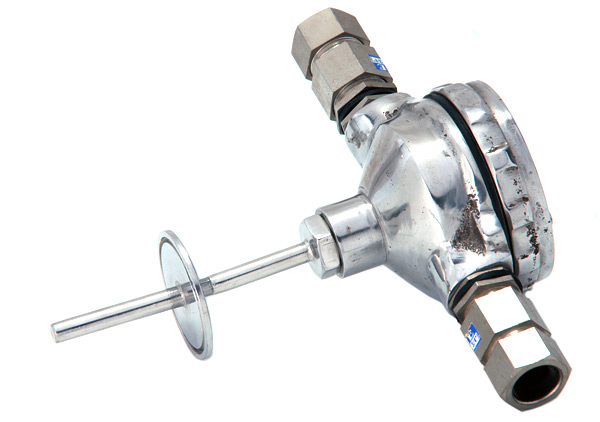
A thermowell is a protective tube or sleeve, typically made of metal or ceramic, that houses
temperature sensors such as thermocouples, resistance temperature detectors (RTDs), or
thermistors. Inserted into a process stream (e.g., pipelines, reactors, or vessels), thermowells
shield the sensor from harsh conditions like high pressure, corrosive fluids, or abrasive materials
while allowing accurate temperature monitoring. By isolating the sensor, Thermowells also
enable maintenance or replacement without disrupting the process.

Category:

Description

Types of Thermowells

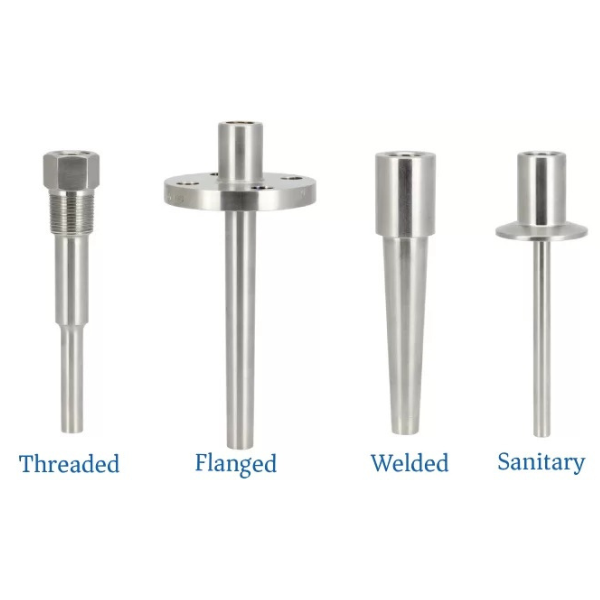
Thermowells come in various designs to suit different applications:
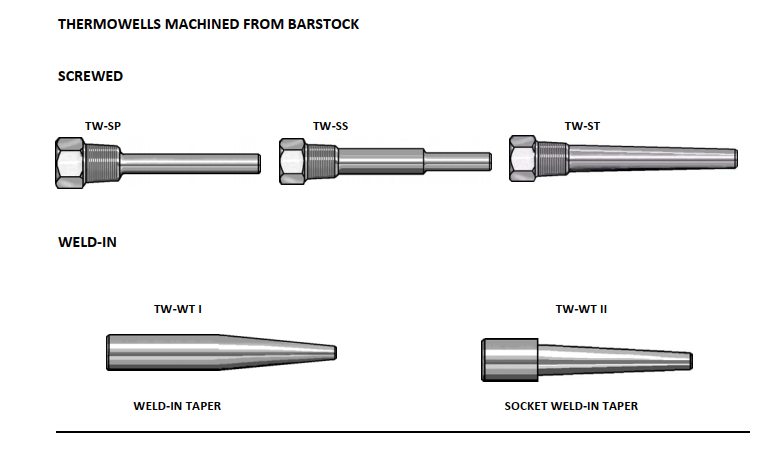
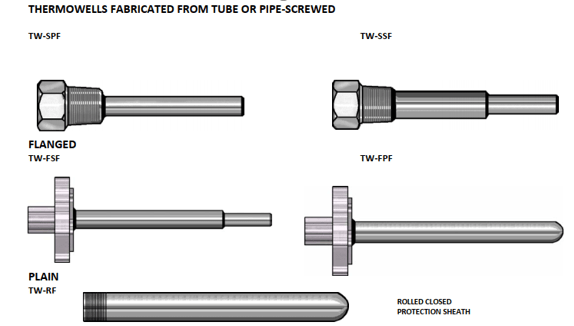
1. Threaded Thermowells: Screwed directly into the process vessel or pipe, offering easy
installation and removal.
2. Flanged Thermowells: Attached via a flange, commonly used in high-pressure or large-
diameter pipelines.
3. Welded Thermowells: Permanently welded into place for applications requiring a
secure, leak-proof connection.
4. Socket Weld Thermowells: Welded into a socket for a robust connection in high-
vibration environments.
5. Vanstone Thermowells: Feature a two-piece design with a replaceable stem, ideal for
corrosive environments

Materials

Thermowells are made from materials like stainless steel, Inconel, Monel, Hastelloy, or
ceramics, chosen based on the process environment (e.g., corrosive fluids, high temperatures, or
abrasive conditions).

Applications of Thermowells

Thermowells are used in a wide range of industries for temperature monitoring under demanding
conditions:
1. Oil and Gas: Monitoring temperatures in pipelines, refineries, and offshore platforms
under high pressure and corrosive conditions.
2. Chemical Processing: Measuring temperatures in reactors and vessels containing
aggressive chemicals.
3. Power Generation: Ensuring accurate temperature readings in boilers, turbines, and
nuclear reactors.

4. Food and Beverage: Maintaining hygiene and safety in processes involving high
temperatures or corrosive cleaning agents.
5. Pharmaceuticals: Providing precise temperature control in sterile, high-purity
environments.
6. HVAC Systems: Monitoring fluid temperatures in heating and cooling systems.

Advantages of Thermowells

ο‚· Sensor Protection: Shields delicate sensors from harsh process conditions, extending
their lifespan.
ο‚· Process Continuity: Allows sensor replacement or calibration without shutting down the
process.
ο‚· Versatility: Available in various materials, sizes, and configurations to suit diverse
applications.
ο‚· Accuracy: Properly designed thermowells minimize thermal lag, ensuring precise
temperature measurements.
ο‚· Safety: Prevents sensor exposure to hazardous environments, reducing the risk of leaks
or failures.

Cart (0 items)

Product Enquiry