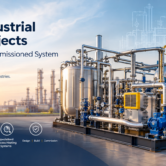



Turnkey Industrial Heating Projects: From Concept to Commissioned System
Most industrial heating requirements do not stop at a single heater. A process tank needs a heater sized to its volume, a controller matched to its chemistry, pumps to circulate the fluid, an expansion tank to handle thermal expansion, and piping designed for the right pressure drop and flow velocity. When all of these need to work together as one system, a turnkey project approach — where a single engineering team designs, builds, and commissions the complete system — removes the coordination risk of stitching together components from multiple vendors.
Sensewell Instruments has engineered turnkey thermal systems across hot oil heating, thermic fluid circulation, reactor systems, steam generation, and nitrogen regeneration for chemical, pharmaceutical, and process manufacturing plants. This post walks through the range of turnkey projects we design and build, using real system configurations and engineering drawings from our project portfolio.
1. What Does a Turnkey Heating Project Include?
A turnkey heating project typically covers the full scope from process requirement to commissioned system:
- Process engineering — heat load calculations, fluid selection, and system sizing based on the actual process conditions.
- Mechanical design — tanks, heater chambers, piping, pumps, and structural supports, engineered as P&ID and GA drawings.
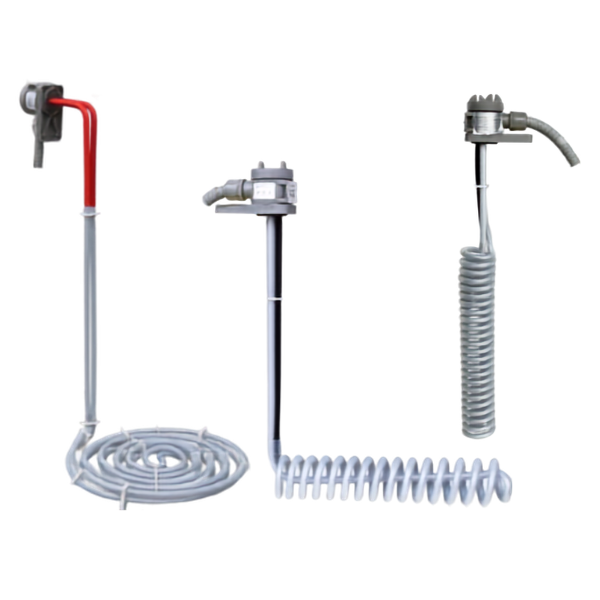
- Heating elements — bundle heaters, immersion heaters, or inline heaters sized to the exact kW requirement.
- Instrumentation and controls — temperature sensors, controllers, high-temperature cut-offs, and pressure/level instrumentation.
- Fabrication and assembly — built and pressure-tested before dispatch.
- Installation and commissioning — on-site erection, wiring, and performance verification against the design parameters.
Because every component is engineered together rather than sourced separately, a turnkey system reduces interface mismatches between the heater, the pump, and the controls — a common source of underperformance in heating systems assembled piecemeal.
2. Hot Oil and Thermic Fluid Heating Systems
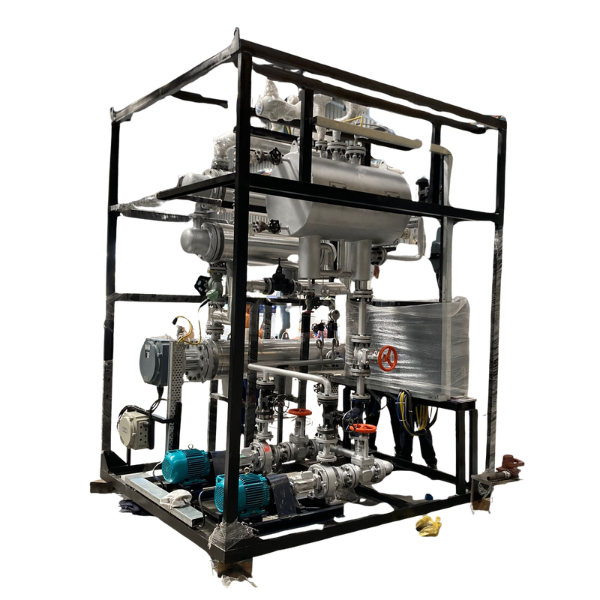
Thermic fluid (hot oil) systems are among the most common turnkey requirements, since they need to combine a heater bank, circulation pumps, an expansion tank, and temperature control into a single closed loop. Sensewell has engineered these across a wide range of capacities.
10,000 kcal hot oil system
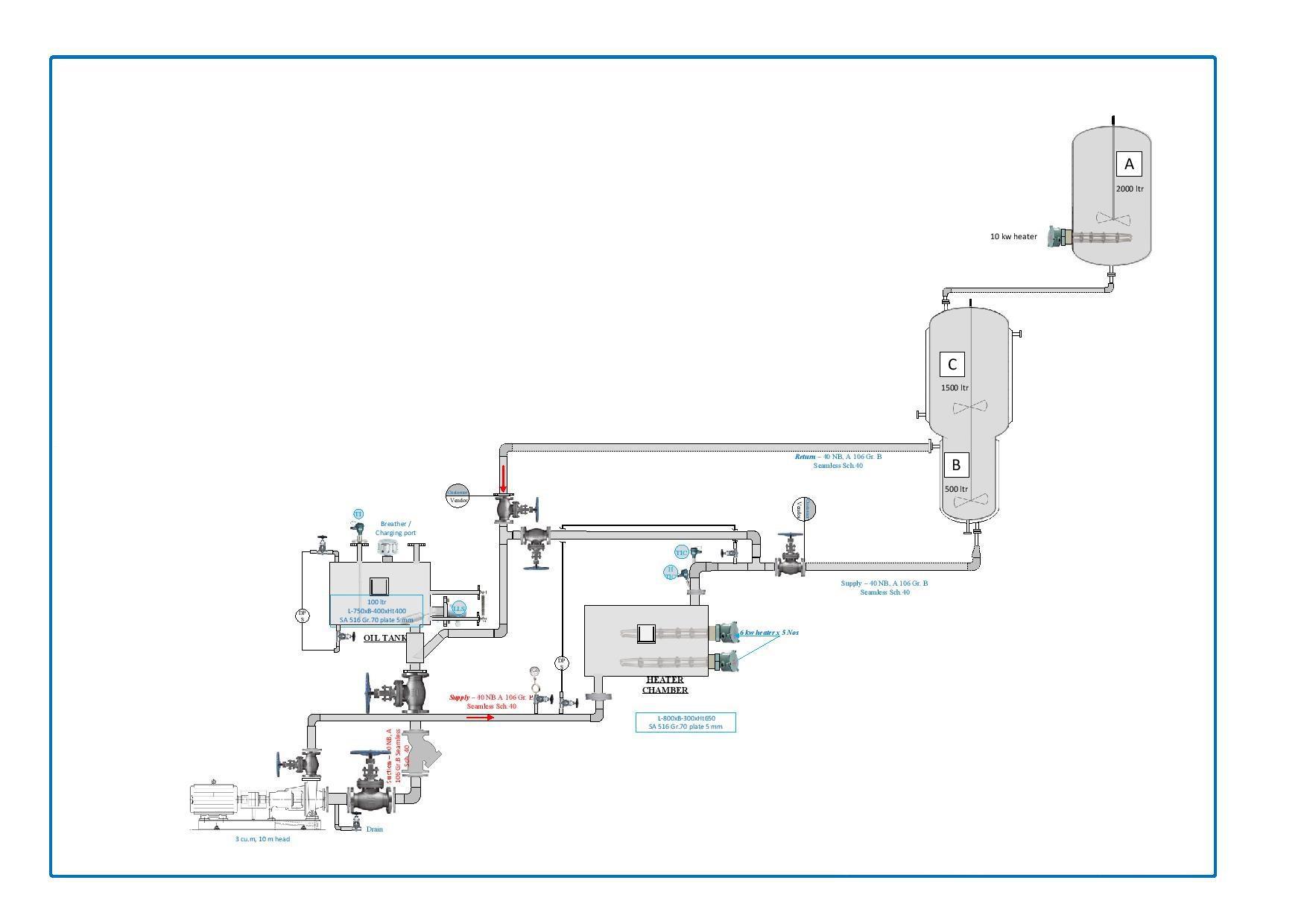
A compact closed-loop design with a dedicated oil tank, heater chamber, and centrifugal pump, suited to smaller process loads.
25,000 kcal portable hot oil system with N₂ blanketing
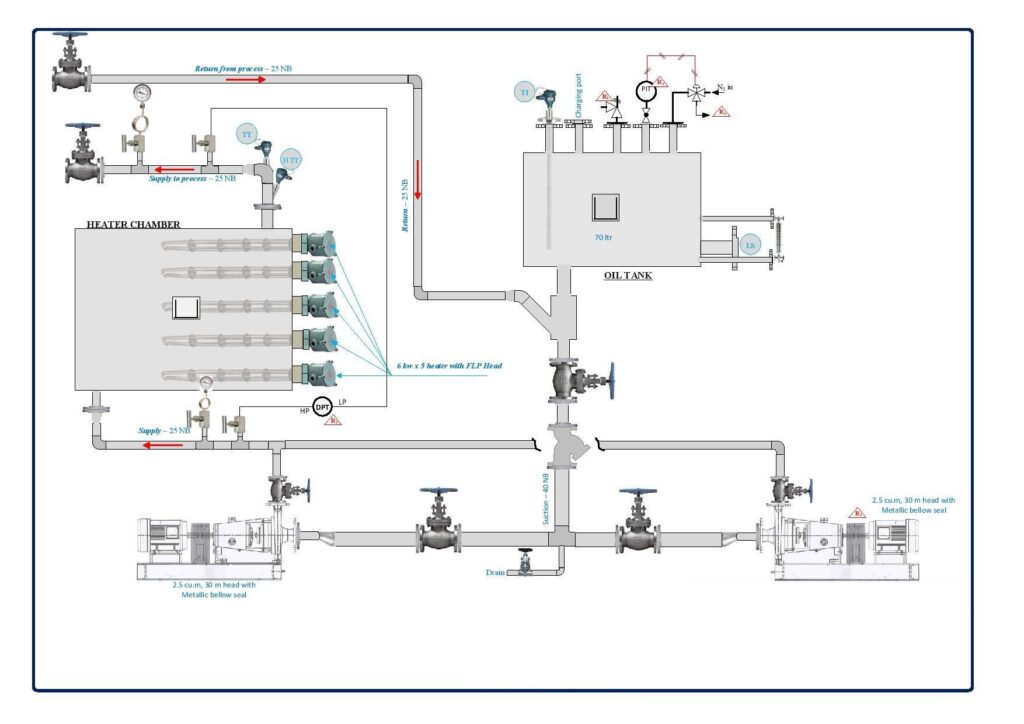
Built on a skid with dual centrifugal pumps (duty and standby), a 6 kW × 5-heater chamber with flameproof heads, and nitrogen blanketing on the oil tank to prevent oxidation of the thermic fluid.
70,000 kcal hot oil system
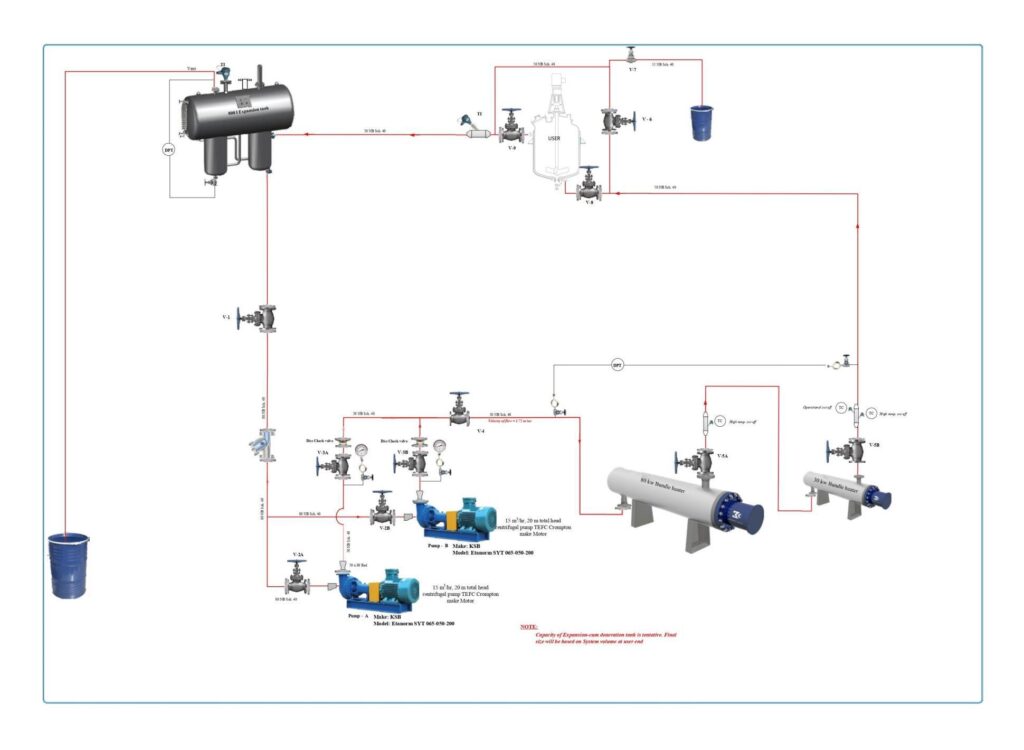
Includes a 900-litre expansion tank, duty and standby centrifugal pumps, and dual bundle heaters (80 kW and 30 kW) with high-temperature cut-off protection.
3,00,000 kcal hot oil system
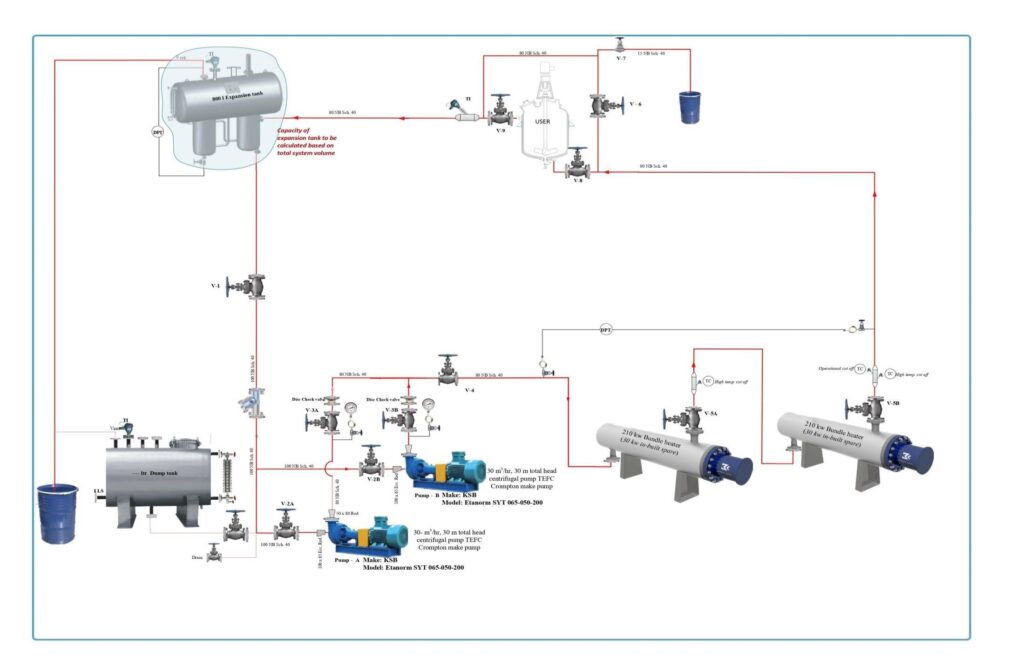
A larger closed loop with an 800-litre expansion tank, twin 30 m³/hr centrifugal pumps, and two 210 kW bundle heaters, each with a built-in spare capacity allowance.
1,29,000 kcal (150 kW) thermic fluid heating system
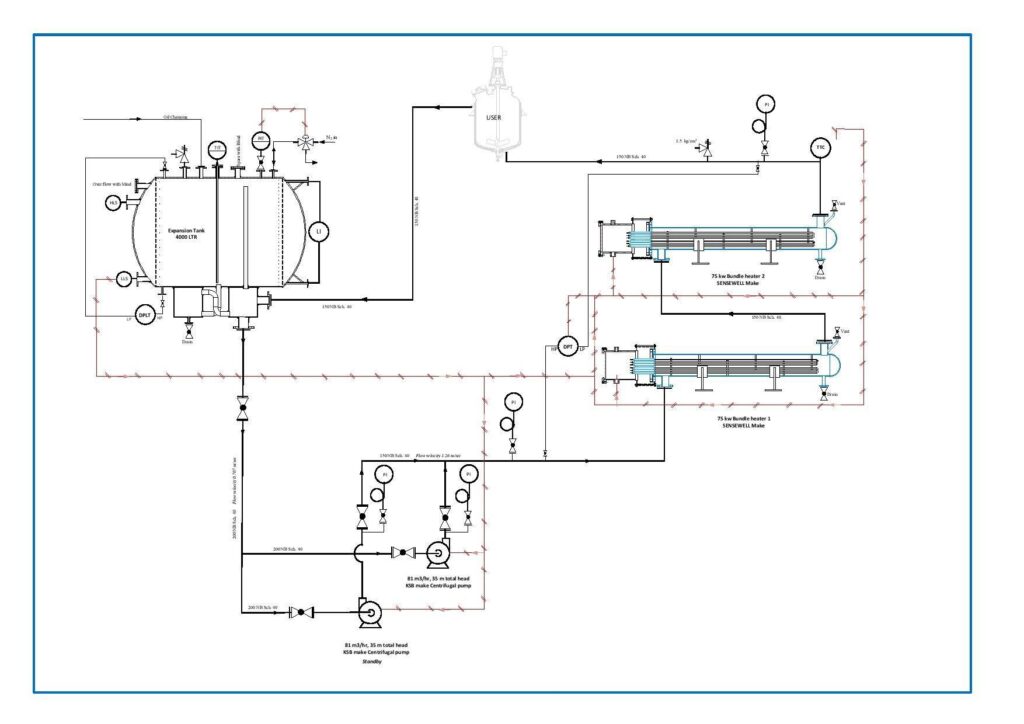
A dual bundle-heater configuration (2 × 75 kW) with a 4,000-litre expansion tank and duty/standby centrifugal pumps rated at 81 m³/hr.
15,00,000 kcal gas-fired thermic fluid system with secondary cooling
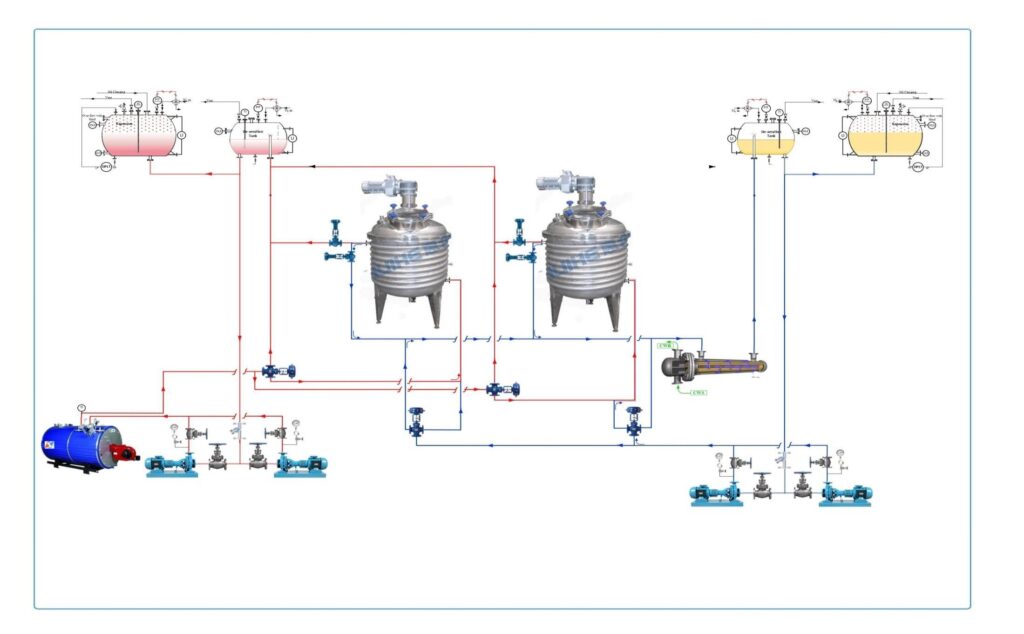
Combines a gas-fired thermic fluid heater, a de-aeration and expansion tank loop, twin jacketed reactors, and a secondary cooling water circuit for processes that need both heating and controlled cooling in the same system.
Single fluid heating–cooling system
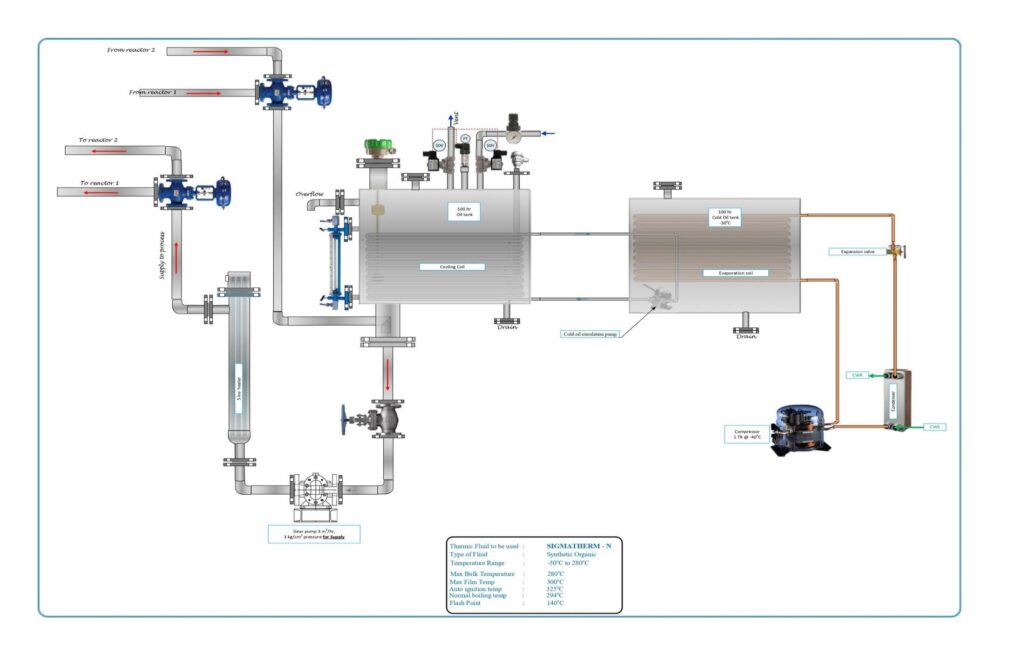
Uses one thermic fluid (rated −50°C to 280°C) to both heat and cool the same process line, switching between a fin heater for heating and a refrigeration-based cold oil loop for cooling, avoiding the need for two separate fluid systems.
3. Reactor Systems and Process Skids
For chemical and pharmaceutical R&D and production, Sensewell designs custom-engineered reactor heating skids.
Laboratory vapour phase reactor with catalyst bed
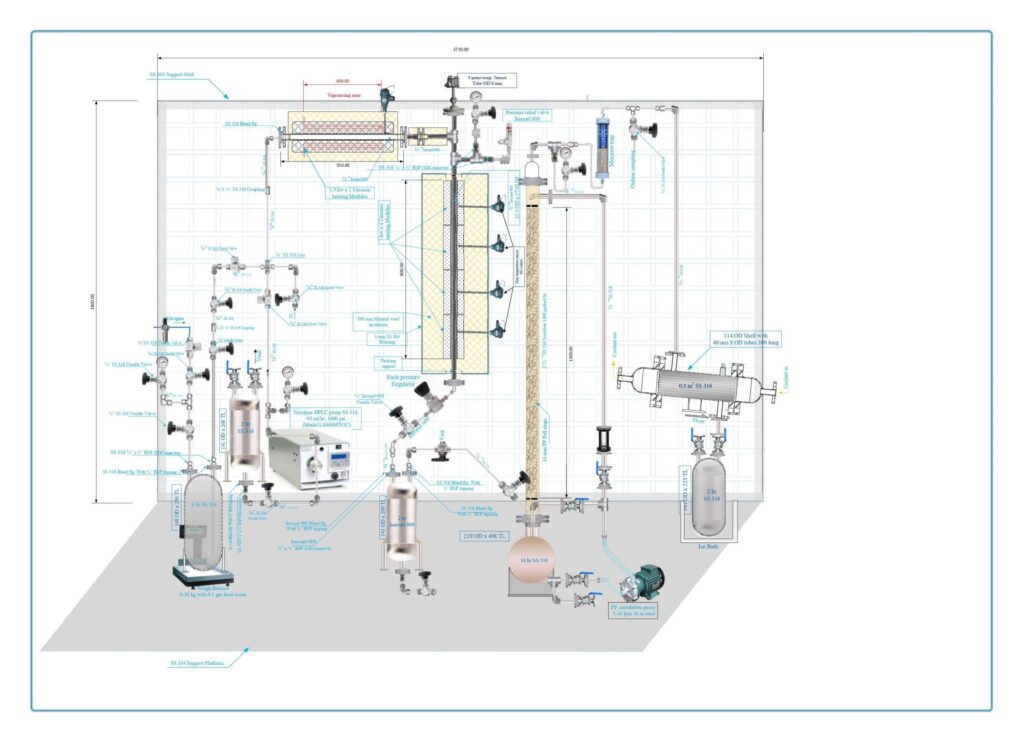
Includes a jacketed feed heater, a catalyst bed reactor section with dedicated heating modules, a condenser, and online sampling, built for controlled vapour-phase reaction studies.
Pyrolysis reactor system
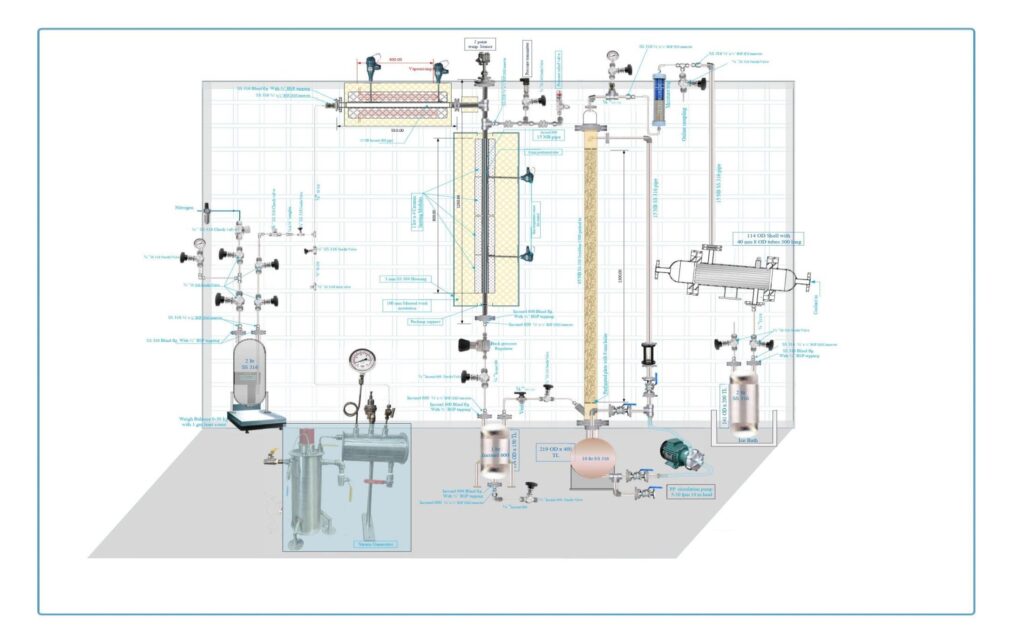
A similar jacketed reactor and heating-module configuration adapted for pyrolysis conditions, with a steam generator and shell-and-tube condenser downstream.
Micro reactor system
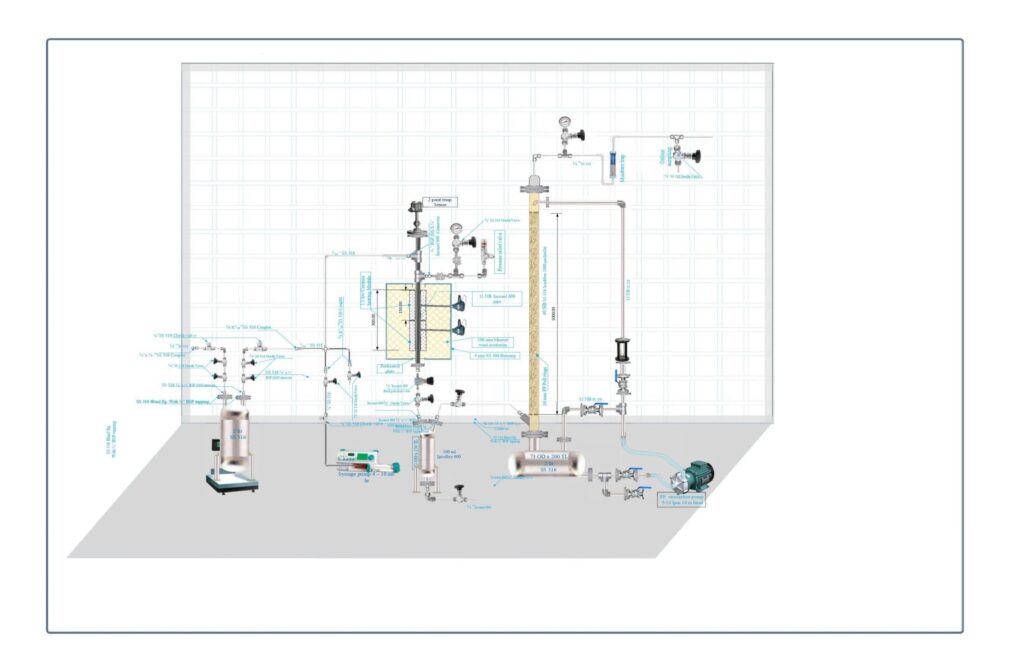
A scaled-down version for small-batch or continuous-flow process development, with a syringe pump feed and a compact heated reaction column.
Schematic for 400 bar fixed bed reactor system
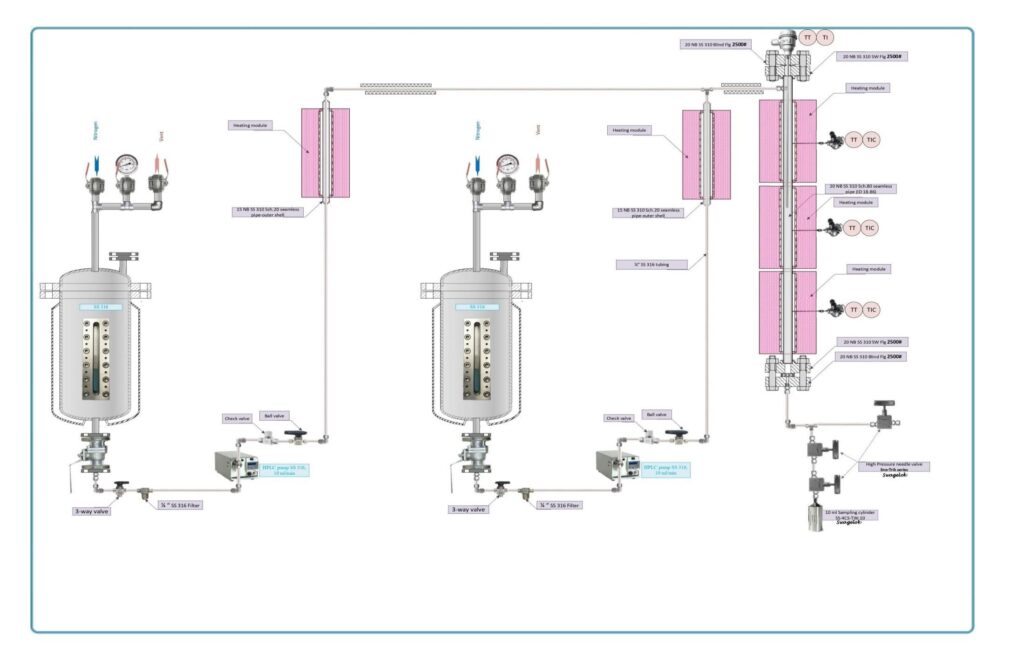
A high-pressure twin-reactor configuration rated to 2500# flange class, with HPLC feed pumps and a heated transfer line between the reactor and sampling section.
Schematic for fixed bed reactor system
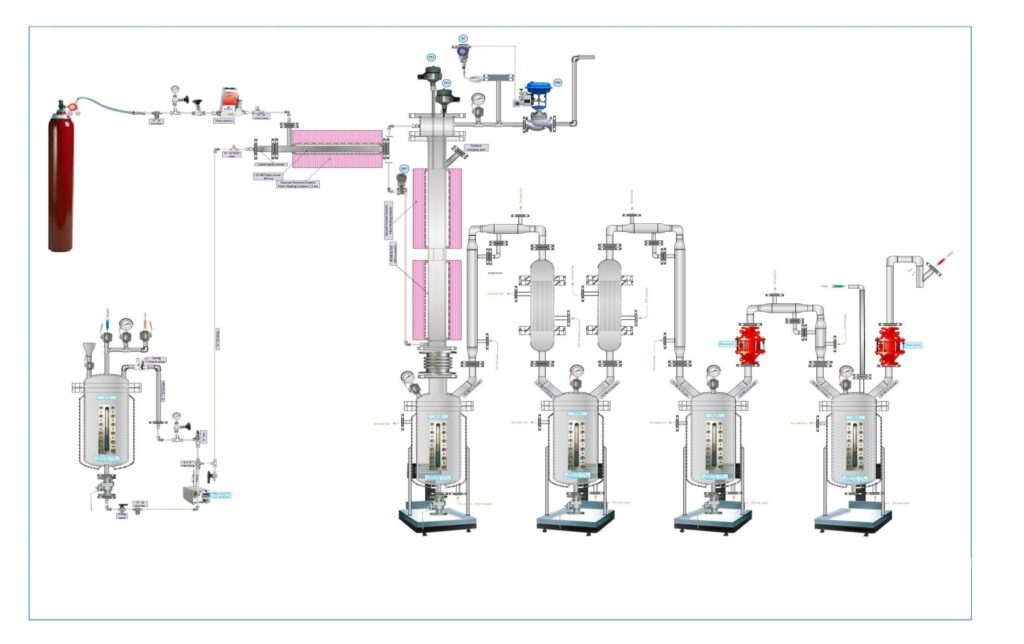
A four-reactor bank with a shared heated feed line, individual condensers per reactor, and a nitrogen purge and flow control skid.
R142B cracker with single 65NB U-tube
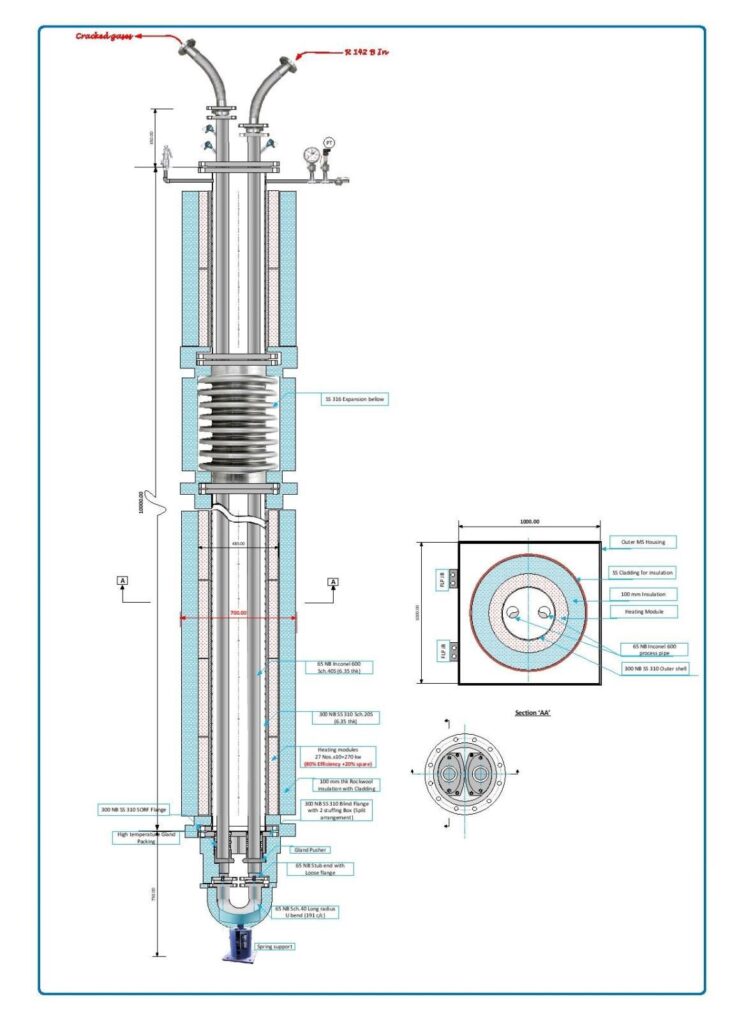
A high-temperature cracking unit using an Inconel 600 U-tube with an SS 310 outer shell and 27 heating modules (80% duty, with 20% spare capacity built in).
4. Steam and Air Heating Systems
Steam super heater
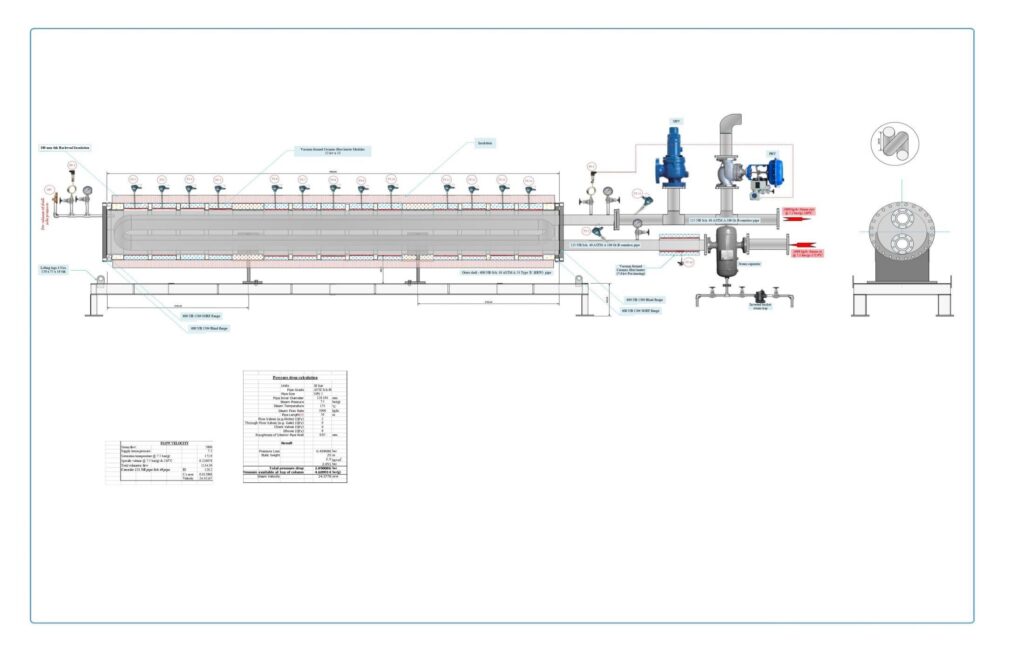
An electrically heated superheater section with ceramic fibre heater modules along the pipe length, engineered with a documented pressure-drop calculation for the specific steam flow rate and pipe size.
Hot air generator blower
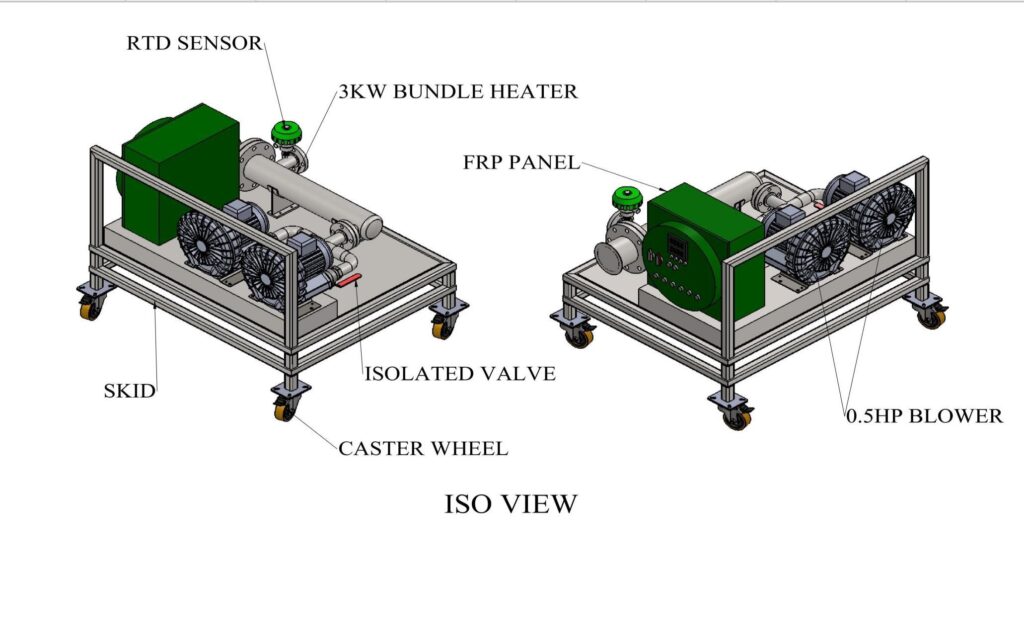
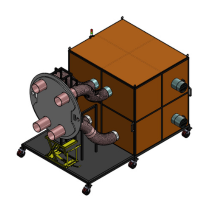
A skid-mounted unit combining a 3 kW bundle heater, RTD sensor, isolation valve, and 0.5 HP blower on a mobile caster-wheel frame, with an FRP control panel.
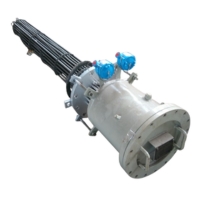
75 kW inline bundle heater
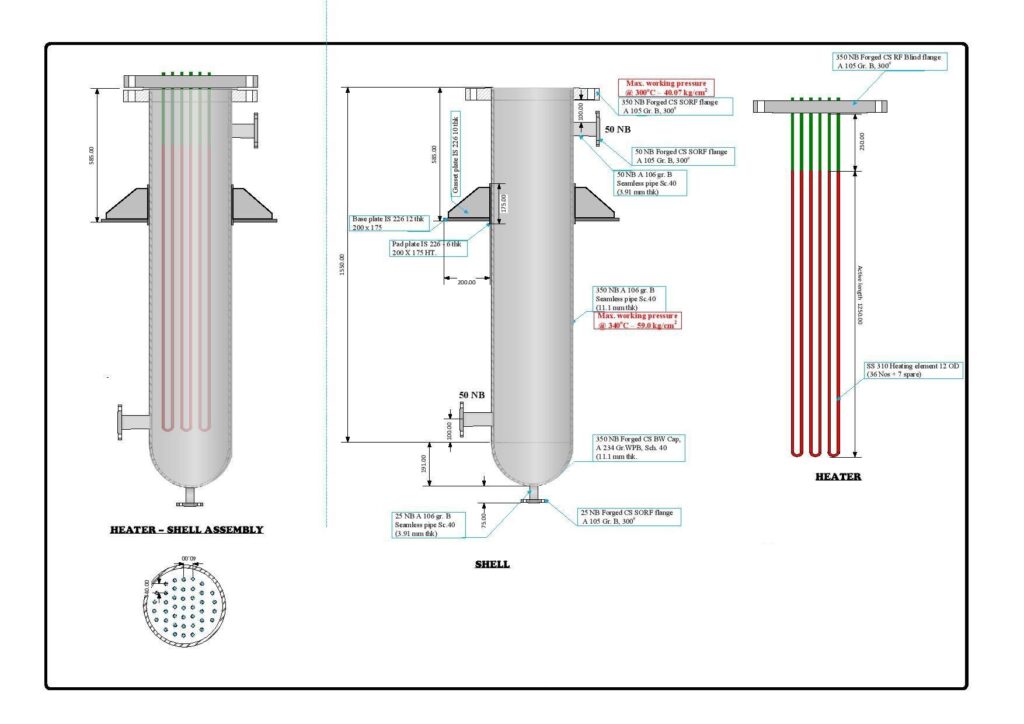
A pressure-rated inline heater assembly (rated up to 40 kg/cm² at 300°C in the tested configuration) with SS 310 heating elements and a full mechanical design pack covering shell, flanges, and heater assembly.
180 kW heater bank
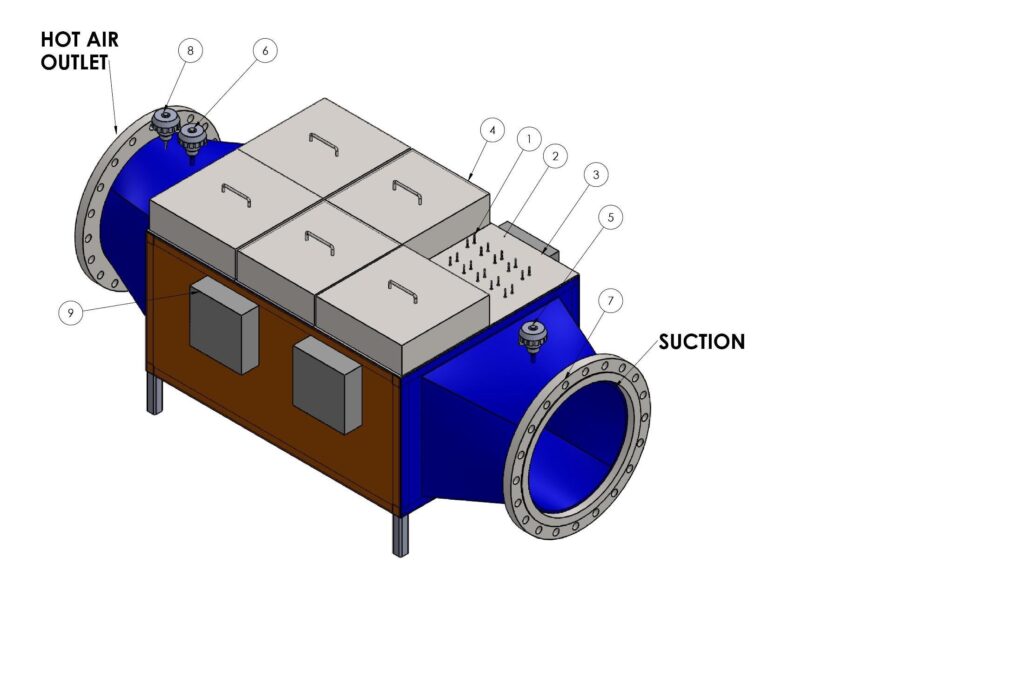
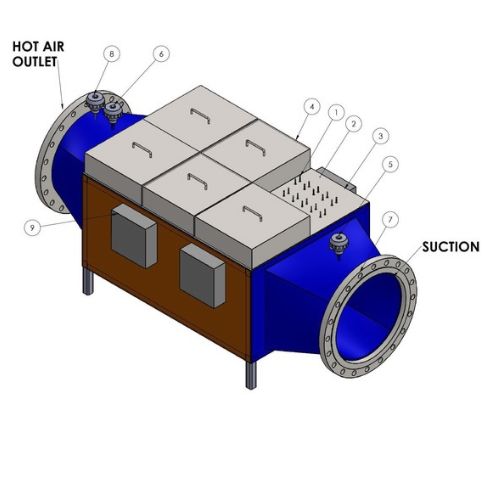
A multi-module heater bank with ceramic heating blocks arranged over a suction/discharge duct, designed for hot air generation at scale.
5. Specialised Process Heating Systems
Heater arrangement on a 1.5 KL acrylic thickener tank
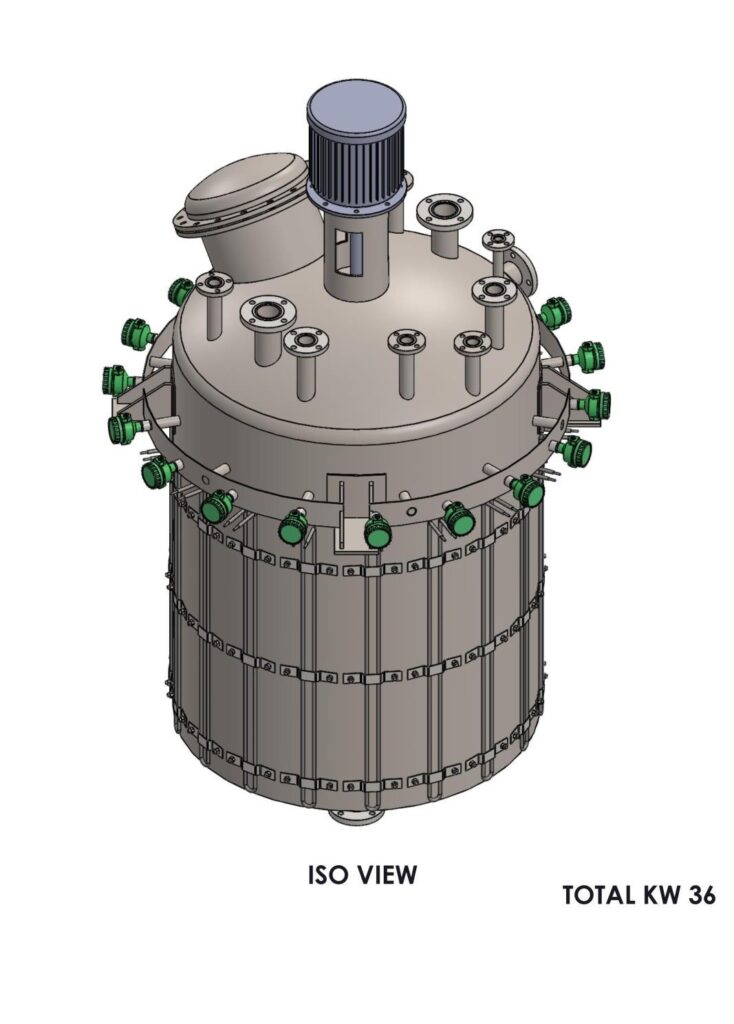
A 36 kW total heating arrangement distributed around the tank circumference for uniform heat transfer into a large-volume vessel.
Hot water bath for drum melting
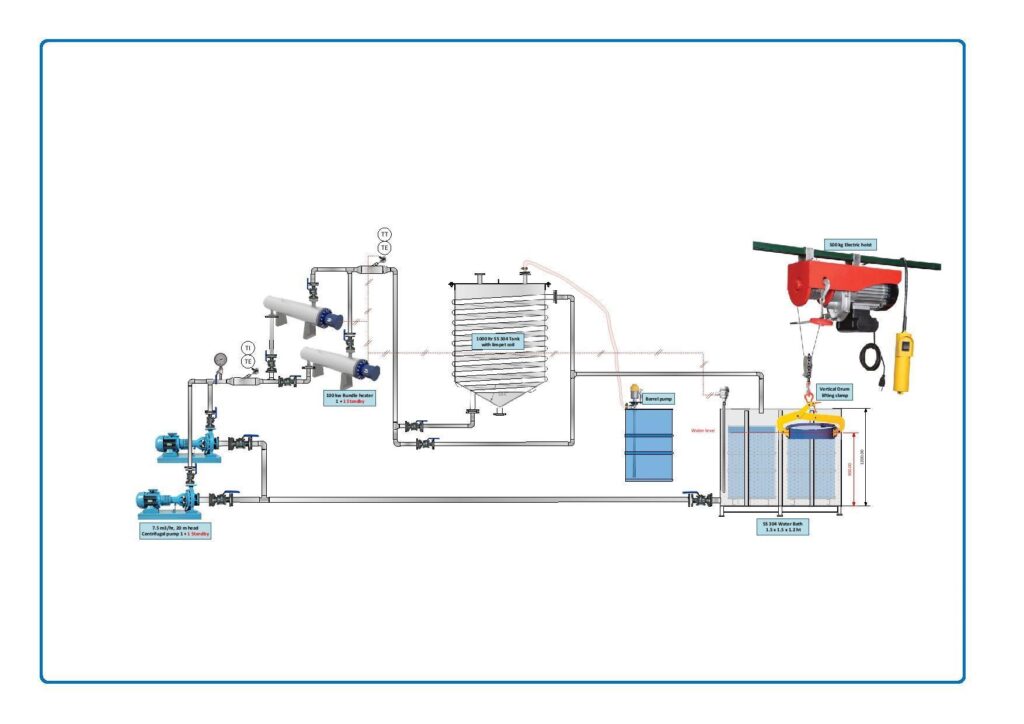
Combines a bundle heater loop, an SS 304 insulated tank, and a drum-lifting hoist system to melt solidified drum contents without direct flame exposure.
Hot water circulation system for mould heating
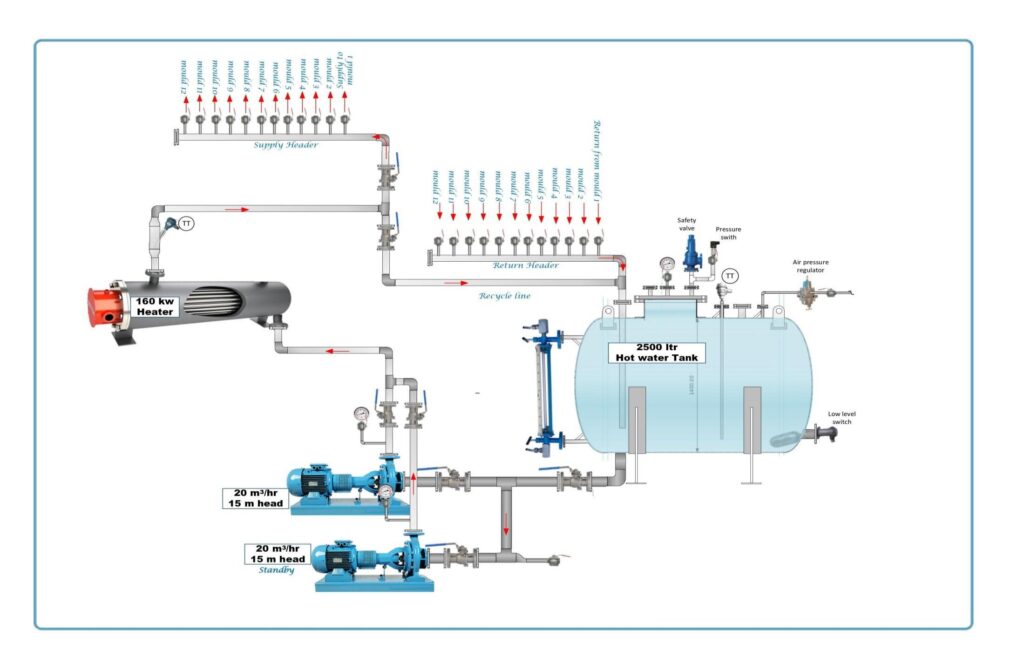
A 160 kW heater feeding a 2,500-litre hot water tank, with duty/standby pumps distributing heated water to up to 12 moulds through supply and return headers.
Nitrogen regeneration system
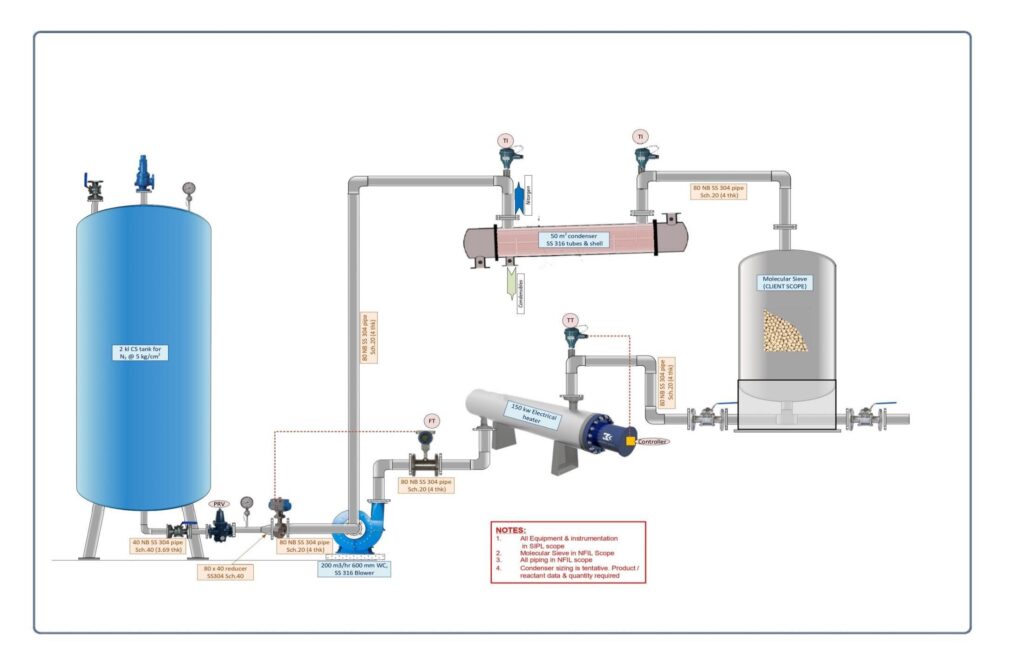
Uses a 150 kW electrical inline heater to heat nitrogen gas for regenerating a molecular sieve bed, with a shell-and-tube condenser to recover condensables before the gas reaches the sieve.
6. Why Choose a Turnkey Approach
Single point of accountability. When the heater, pump, piping, and controls all come from one engineering team, there is no ambiguity about which vendor is responsible if the system underperforms.
Designs matched to actual process conditions. Every project referenced above was sized to a specific kcal or kW requirement, flow rate, and pressure rating rather than selected from a generic catalogue.
Built-in safety margins. Several of these designs include explicit spare capacity — for example, standby pumps, spare heating modules, or oversized expansion tanks — sized during the design phase rather than added as an afterthought.
Faster commissioning. Because the mechanical, electrical, and control elements are engineered together, on-site integration issues are reduced, and the system can be tested as a complete unit before final handover.
7. How the Turnkey Process Works
- Requirement discussion — process fluid, target temperature, heating/cooling load, and operating pressure are gathered from the client.
- Process and mechanical design — heat load calculations, P&ID development, and equipment sizing (heaters, pumps, tanks, piping).
- Detailed engineering — GA drawings, heater assembly drawings, and instrumentation and control philosophy are finalised.
- Fabrication — heaters, tanks, and skids are built and quality-checked against the design specification.
- Factory testing — where applicable, systems are pressure-tested and functionally checked before dispatch.
- Site installation and commissioning — the system is installed, wired, and commissioned against the original design parameters.
Get a Turnkey Heating System From Sensewell
Sensewell Instruments Pvt Ltd, established in 2002, designs and builds turnkey industrial heating and thermal engineering systems, from compact hot oil loops to multi-reactor process skids. For an accurate proposal, share your process fluid, target temperature, heat load, operating pressure, and site conditions with our engineering team.
- Call: +91 9824060315 | +91 9725151580
- Email: [email protected]
- Address: 54/4, G.I.D.C. Makarpura, Vadodara – 390 010, Gujarat, India
- Call to action: Discuss your turnkey project with Sensewell
8. Frequently Asked Questions
What is a turnkey industrial heating project?
It is a complete heating system — covering process design, heaters, pumps, piping, controls, fabrication, and commissioning — delivered as one integrated package rather than assembled from separately sourced components.
What size of thermic fluid system can be built as a turnkey project?
Capacity is matched to the process load. Systems can range from a few thousand kcal for a small batch process up to 15,00,000 kcal or more for larger continuous processes, with the heater, pump, and expansion tank all sized to that load.
Can a turnkey system combine both heating and cooling?
Yes. A single-fluid heating–cooling system uses one thermic fluid across both a heating loop and a refrigeration-based cooling loop, avoiding the need for two separate fluid circuits.
What safety features are typically included?
Common features include high-temperature cut-offs, standby pumps, spare heater capacity, nitrogen blanketing for oxidation-sensitive fluids, and pressure relief provisions, all defined during the design stage.
How long does a turnkey heating project typically take?
Timelines depend on system complexity and capacity, but generally include design and engineering, fabrication, factory testing, and site commissioning as sequential phases. Sharing complete process requirements upfront shortens the design cycle.
9. Conclusion
A turnkey approach brings the heater, the fluid circuit, the controls, and the mechanical structure together as one engineered system rather than a collection of separately specified parts. From compact 10,000 kcal hot oil loops to 15,00,000 kcal gas-fired systems and high-pressure fixed bed reactor skids, matching the system design to the real process conditions — not a generic specification — is what determines whether the finished installation performs reliably from day one.