

Thermic Fluid System Solutions in Vadodara, India
In modern industries, heat plays a crucial role in various processes, from drying and melting to distillation and chemical reactions. One of the most efficient and reliable methods for transferring heat in industrial operations is through a thermic fluid system. These systems are known for their ability to provide precise temperature control, energy efficiency, and safety compared to conventional steam-based systems. Let’s explore how a thermic fluid system works, its components, applications, and benefits in detail.
Table of Contents
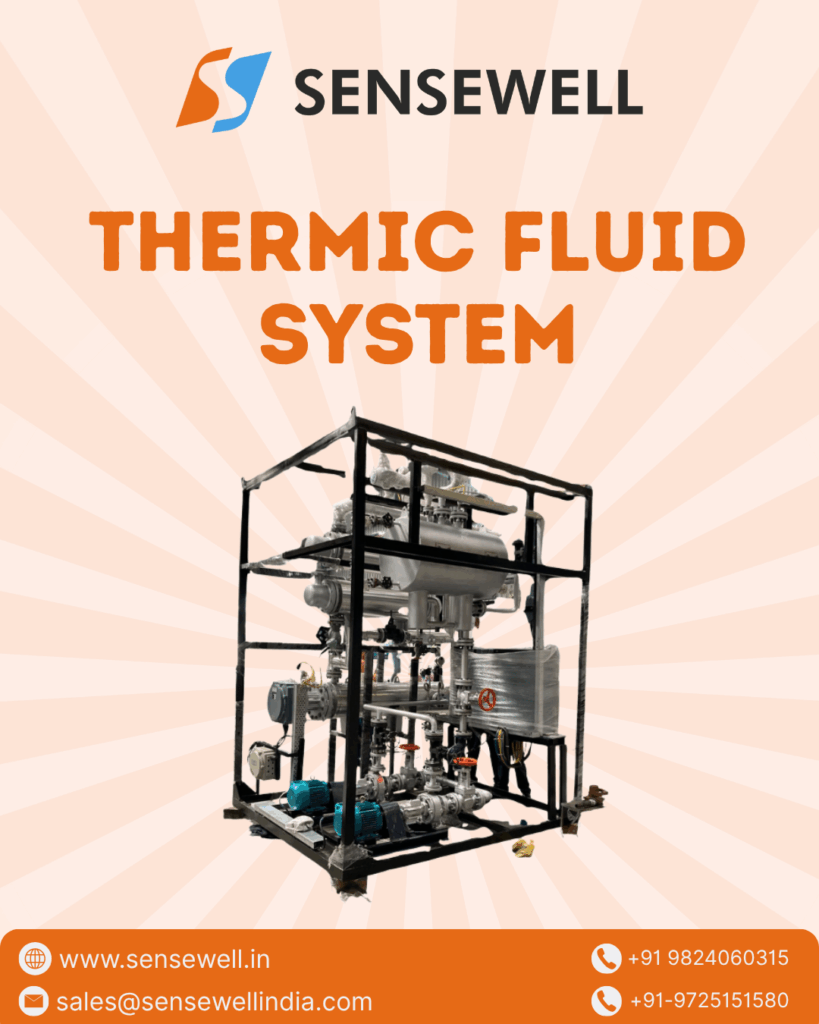
Thermic Fluid Heater
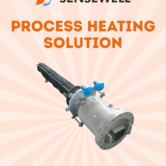
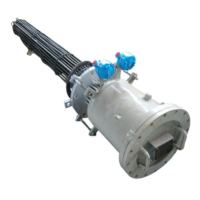
At the heart of any thermic fluid system lies the thermic fluid heater. It acts as the primary heat generator, where fuel is burned to heat a specialised thermal oil or synthetic fluid. This heater can be fired by a range of fuels, such as natural gas, diesel, furnace oil, or even solid fuels like coal and biomass Process heating solution.
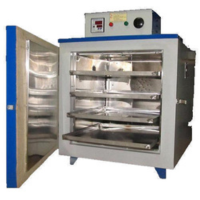
The key advantage of a thermic fluid heater is its ability to provide uniform heating at high temperatures (up to 300–400°C) without pressurising the system. Unlike boilers, which require water and high-pressure steam, a thermic fluid heater transfers heat through an organic medium, minimising the risk of explosion and simplifying operation Electrical Oven.
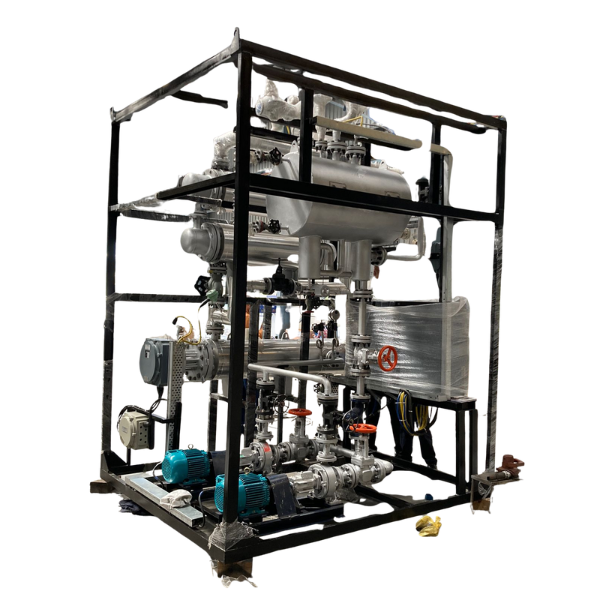
Modern heaters are designed with efficient combustion chambers, heat recovery units, and precise temperature controls to optimise performance and reduce fuel consumption.
Working Principle of Thermic Fluid System
The working principle of a thermic fluid system is based on indirect heat transfer. The system uses a closed-loop circuit where a thermal fluid (usually mineral oil or synthetic heat transfer fluid) is heated in the thermic fluid heater.
Here’s how it works step-by-step:
- Heat Generation: The burner ignites fuel in the combustion chamber of the heater, producing heat.
- Heat Transfer: This heat is transferred to the thermic fluid circulating through coils or tubes in the heater.
- Fluid Circulation: The heated fluid is then pumped through insulated pipelines to various pieces of process equipment like dryers, reactors, or heat exchangers.
- Heat Utilisation: The process equipment extracts the required heat, and the now-cooled fluid returns to the heater to be reheated completing the cycle.
This continuous closed-loop operation ensures stable temperature control and minimises heat loss. The system operates under low pressure even at high temperatures, ensuring safety and efficiency in the electrical oven.
Components of Thermic Fluid System
A thermic fluid consists of several key components that work together to deliver consistent thermal energy. These include:
- Thermic Fluid Heater: The main source of heat generation.
- Thermic Fluid Pump: Responsible for circulating the heated fluid through the system.
- Expansion Tank: Compensates for fluid expansion during heating and maintains system pressure balance.
- Deaerator Tank: Removes trapped air and moisture from the thermic fluid to prevent oxidation and degradation.
- Heat Consumers (Process Equipment): Machines or units that utilise the heat (such as dryers, calenders, reactors, or ovens).
- Return Line: Carries the cooled fluid back to the heater for reheating.
- Control System: Monitors and regulates temperature, flow rate, and safety parameters.
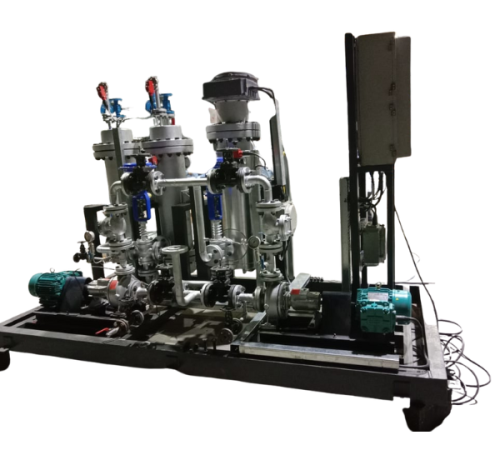
Each component plays a critical role in ensuring smooth operation, long equipment life, and high energy efficiency.
Thermic Fluid Circulation System
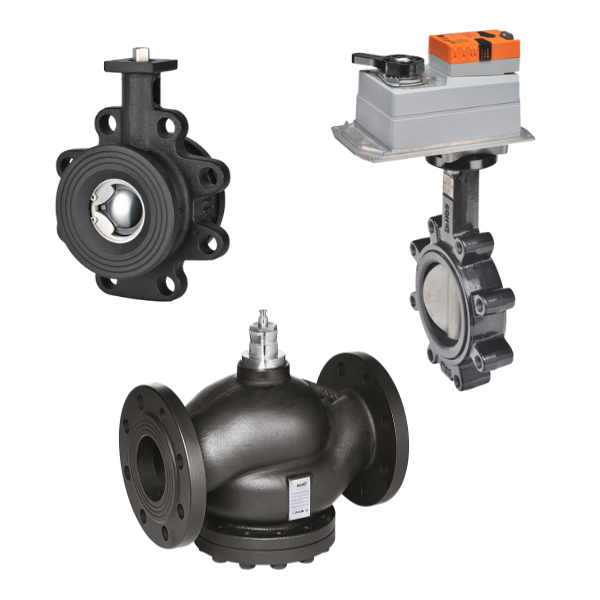
The circulation system ensures continuous movement of the heat transfer fluid between the heater and the process equipment. It typically includes a centrifugal pump, insulated pipelines, and control valves.
The design of the circulation system depends on factors like:
- Type of fluid used
- Distance between heater and process equipment
- Required flow rate and pressure drop
A properly designed circulation loop helps maintain uniform temperature, reduce heat loss, and prevent fluid degradation. Additionally, modern systems often include variable frequency drives (VFDs) and flow control systems for optimising pump performance and energy use.
Industrial Applications of Thermic Fluid Systems
Thermic fluids are widely used across industries where consistent and controlled heat is required. Some of the most common applications include:
- Textile Industry: For drying, dyeing, and printing processes.
- Chemical and Pharmaceutical Plants: For reactors, distillation, and solvent recovery systems.
- Food Processing: For baking, frying, and oil heating applications.
- Plastic and Rubber Industry: For mould heating and extrusion processes.
- Oil and Gas: In bitumen heating, refinery operations, and petrochemical plants.
- Paper Industry: For dryers, calendars, and coating machines.
The versatility and reliability of thermic fluid make it suitable for any process requiring indirect heating without the complexities of steam generation.
Advantages of Thermic Fluid Heating
The advantages of using a thermic fluid over conventional heating methods are significant:
- High Temperature at Low Pressure: Provides temperatures up to 400°C without pressurising the system, ensuring safer operation.
- Energy Efficiency: The closed-loop design minimises heat losses and maximises energy utilisation.
- Precise Temperature Control: Advanced controls enable accurate temperature regulation for sensitive processes.
- Low Maintenance Costs: No scaling, corrosion, or blowdown as in steam systems.
- Long Life of Heat Transfer Fluid: With proper maintenance, thermic fluids can last several years.
- Environmentally Friendly: Lower emissions and reduced water usage make it an eco-friendly option.
- Operational Flexibility: Easy start-up and shut-down processes without long waiting times.
These benefits make thermic fluid systems an attractive choice for industries focusing on energy savings, safety, and sustainability.
Comparison Between Thermic Fluid System and Steam Boiler
| Feature | Thermic Fluid System | Steam Boiler |
|---|---|---|
| Operating Pressure | Low (Atmospheric or near) | High (Up to several bar) |
| Max Temperature | Up to 400°C | Usually limited to 180–200°C |
| Medium | Heat transfer oil | Water/Steam |
| Risk Factor | Very low (no explosion risk) | High due to pressurized steam |
| Maintenance | Minimal | Frequent (scaling, corrosion) |
| Efficiency | High due to closed-loop | Moderate |
| Start-Up Time | Quick | Slow |
| Water Requirement | None | Continuous |
| Heat Loss | Low | High (condensate loss) |
In essence, thermic fluid systems provide a more efficient, safer, and cleaner alternative to traditional steam boilers for most industrial heating applications.
A thermic fluid system is a vital solution for industries seeking safe, efficient, and high-temperature heat transfer without the complexities of steam systems. Its versatility, low maintenance, and superior control make it a preferred choice in modern manufacturing setups. By choosing the right thermic fluid, maintaining optimal circulation, and following proper safety standards, industries can ensure long-term, cost-effective performance.
FAQ
1. What is the main function of a thermic fluid system?
A thermic fluid system provides indirect heating using a thermal oil or synthetic fluid, enabling high-temperature heat transfer at low pressure for industrial processes.
2. Which thermic fluid is best for high-temperature applications?
Synthetic heat transfer fluids are ideal for high-temperature operations above 300°C due to their superior thermal stability and oxidation resistance.
3. How is a thermic fluid system different from a steam boiler?
Unlike a steam boiler, a thermic fluid system operates at low pressure and uses thermal oil instead of water, making it safer and more energy-efficient.
4. How often should thermic fluid be replaced?
Typically, heat transfer fluids can last several years with regular testing and maintenance. However, replacement is recommended when the fluid shows signs of oxidation or degradation.
5. What safety measures should be followed in thermic fluid systems?
Operators should monitor fluid temperature, maintain insulation, prevent leaks, and ensure regular cleaning of heaters and filters to avoid overheating and fluid degradation.